Johari
Neuma - revistǎ de culturǎ · 2 May 2026
by Andreea Hedeş
Far from the classic image proposed by Botticelli and which has become archetypal in pop culture, that of a Venus born from the foam of the sea, approaching the shore in all its splendor, the artist does not arrive in front of the public out of nowhere. Beyond talent, which is an element of prime importance, work is an essential factor. Added to these are two more ingredients that matter as much as the feather of Maat in the ceremony of weighing the heart: truth and the sincerity of the creator. Here are the three steps to the recipe for (authentic) success. Although it seems commonplace that the road to success does not always lead to beaten paths, this elementary truth is often ignored.
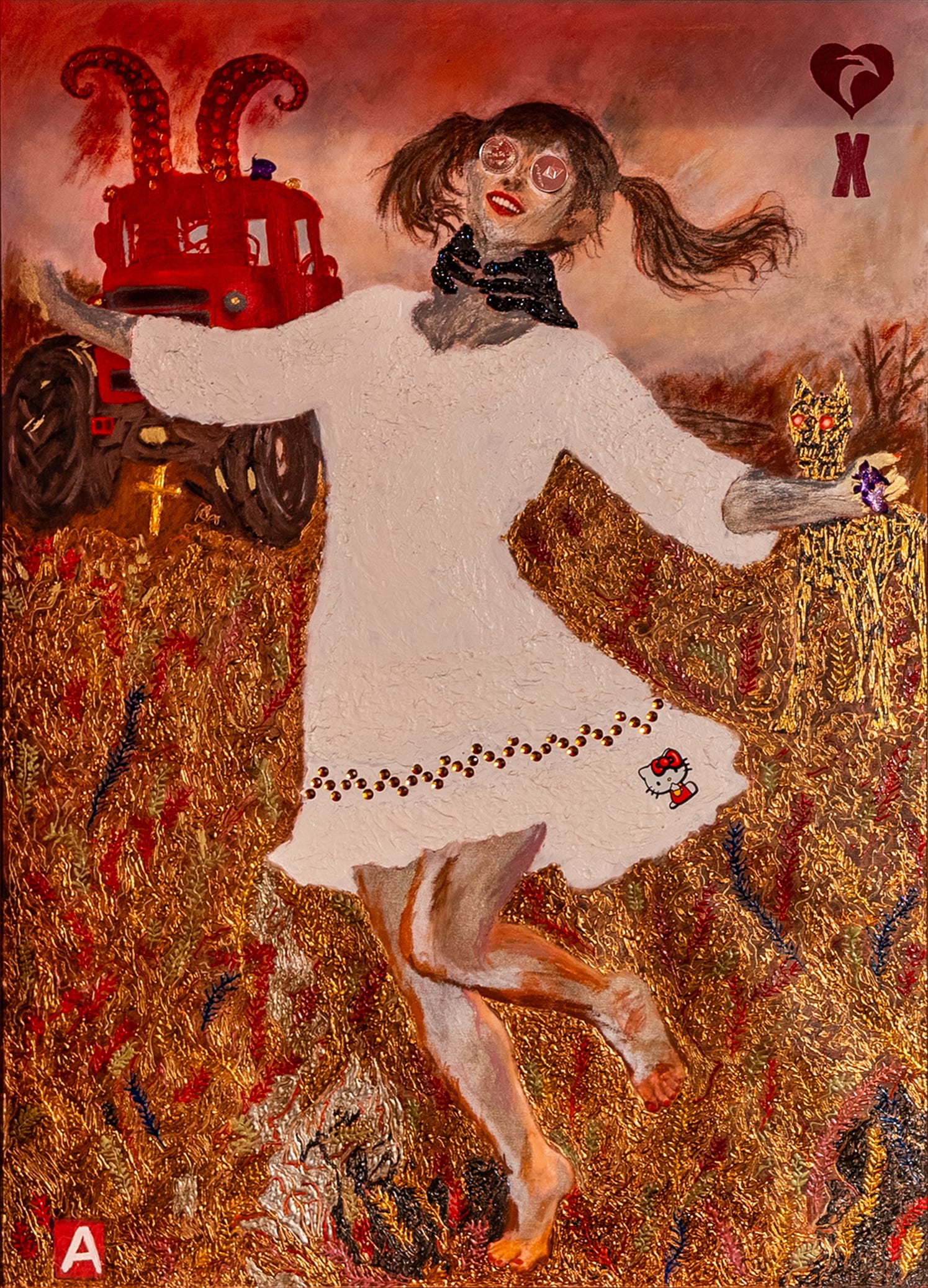
For someone who started painting during the pandemic (2020), perhaps therapeutic, perhaps liberating or even as a form of rebellion, the fact that the year 2026 brought him two personal exhibitions, in two of the most important art centers of the country, it is an extraordinary achievement, in the deepest sense of the word. The path of the painter Liviu Alexa, marked by discretion between the beginning of the pandemic and the current success, perfectly mirrors the stages of the Hero's Journey.
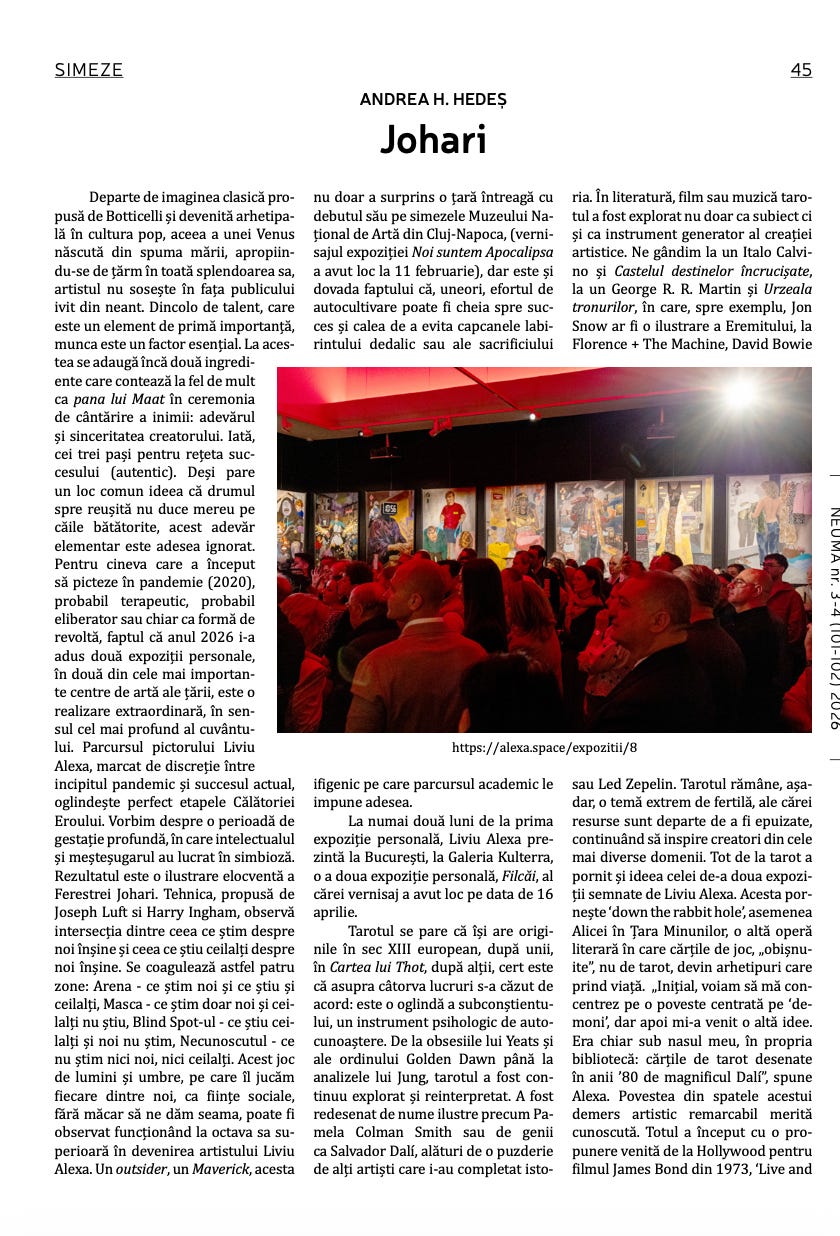
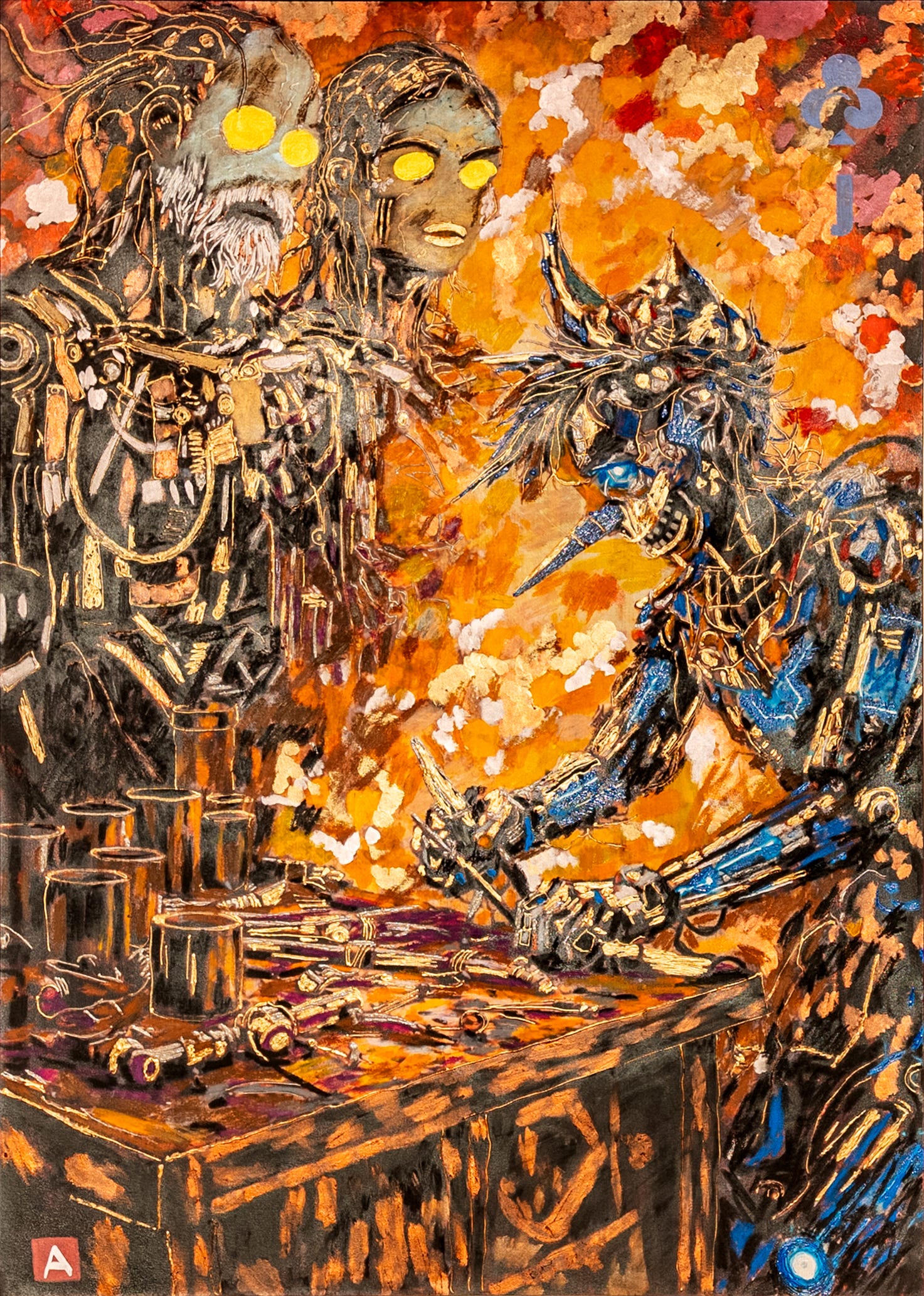
We are talking about a period of deep gestation, in which the intellectual and the craftsman worked in symbiosis. The result is an eloquent illustration of the Johari Window. The technique, proposed by Joseph Luft and Harry Ingham, observes the intersection between what we know about ourselves and what others know about ourselves. Four areas coagulate in this way: the Arena - what we know and what the others also know, the Mask - what only we know and the others do not know, the Blind Spot - what the others know and we do not know, the Unknown - what neither we nor the others know. This game of lights and shadows, which each of us, as social beings, plays without even realizing it, can be observed operating at its higher octave in the becoming of the artist Liviu Alexa. An outsider, a Maverick, he not only surprised an entire country with his debut on the grounds of the National Art Museum in Cluj-Napoca, (the opening of the exhibition We are the Apocalypse took place on February 11), but is also proof that, sometimes, the effort of self-cultivation can be the key to success and the way to avoid the traps of the daedalic labyrinth or the ifigenic sacrifice that the academic course often imposes.
Only two months after the first personal exhibition, Liviu Alexa presents in Bucharest, at the Kulterra Gallery, a second personal exhibition, Filcăi, whose opening took place on the 16 April.
The Tarot seems to have its origins in the 13th century Europe, according to some, in the Book of Thoth, according to others, it is certain that a few things have been agreed upon: it is a mirror of the subconscious, a psychological tool for self-knowledge.
From the obsessions of Yeats and the order of the Golden Dawn to the analyzes of Jung, the tarot has been continually explored and reinterpreted. It was redrawn by illustrious names like Pamela Colman Smith or geniuses like Salvador Dalí, along with a host of other artists who completed its history. In literature, film or music, the tarot has been explored not only as a subject but also as a generative tool of artistic creation. We think of an Italo Calvino and Castle of Crossed Destinies, a George R. R. Martin and Game of Thrones, in which, for example, Jon Snow would be an illustration of the Hermit, in Florence + The Machine, David Bowie or Led Zeppelin. Tarot therefore remains an extremely fertile theme, whose resources are far from exhausted, continuing to inspire creators from the most diverse fields. The idea also started from tarot of the second exhibition signed by Liviu Alexa. It starts 'down the rabbit hole', like Alice in Wonderland, another literary work in which "ordinary" playing cards, not tarot, become archetypes that come to life. "Initially, I wanted to focus on a story centered on 'demons,' but then I had another idea. It was right under my nose, in my own library: the tarot cards drawn in the 80s by the magnificent Dalí," says Alexa.
The story behind this remarkable artistic endeavor deserves to be known. It all started with a proposal from Hollywood for the 1973 James Bond film 'Live and Let Die', where the producers needed a spectacular deck of cards for the character Solitaire. Dalí immediately accepted, but his huge ego and exorbitant financial demands led the producers to drop him in favor of another artist." confesses Liviu Alexa on www.alexa.space
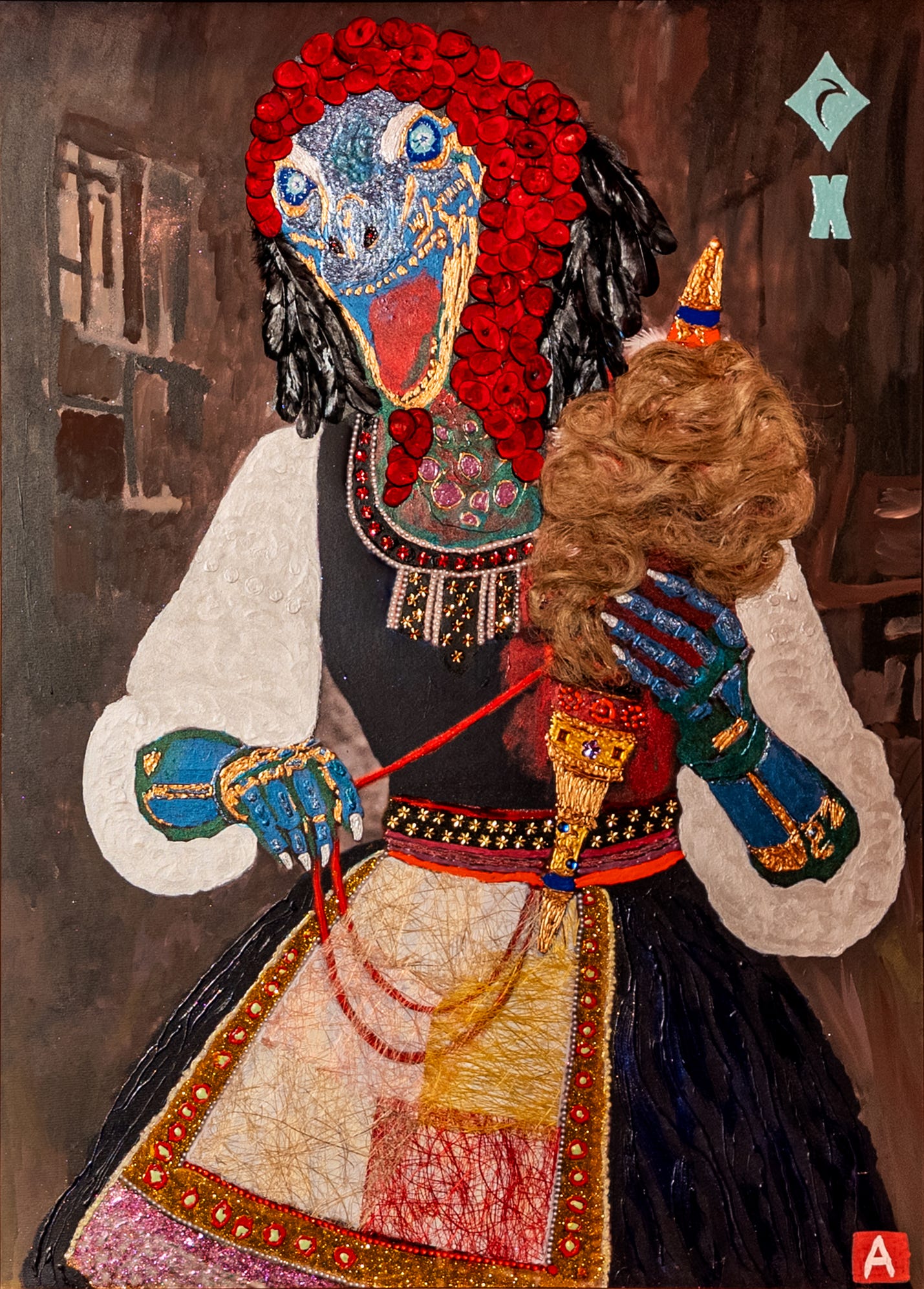
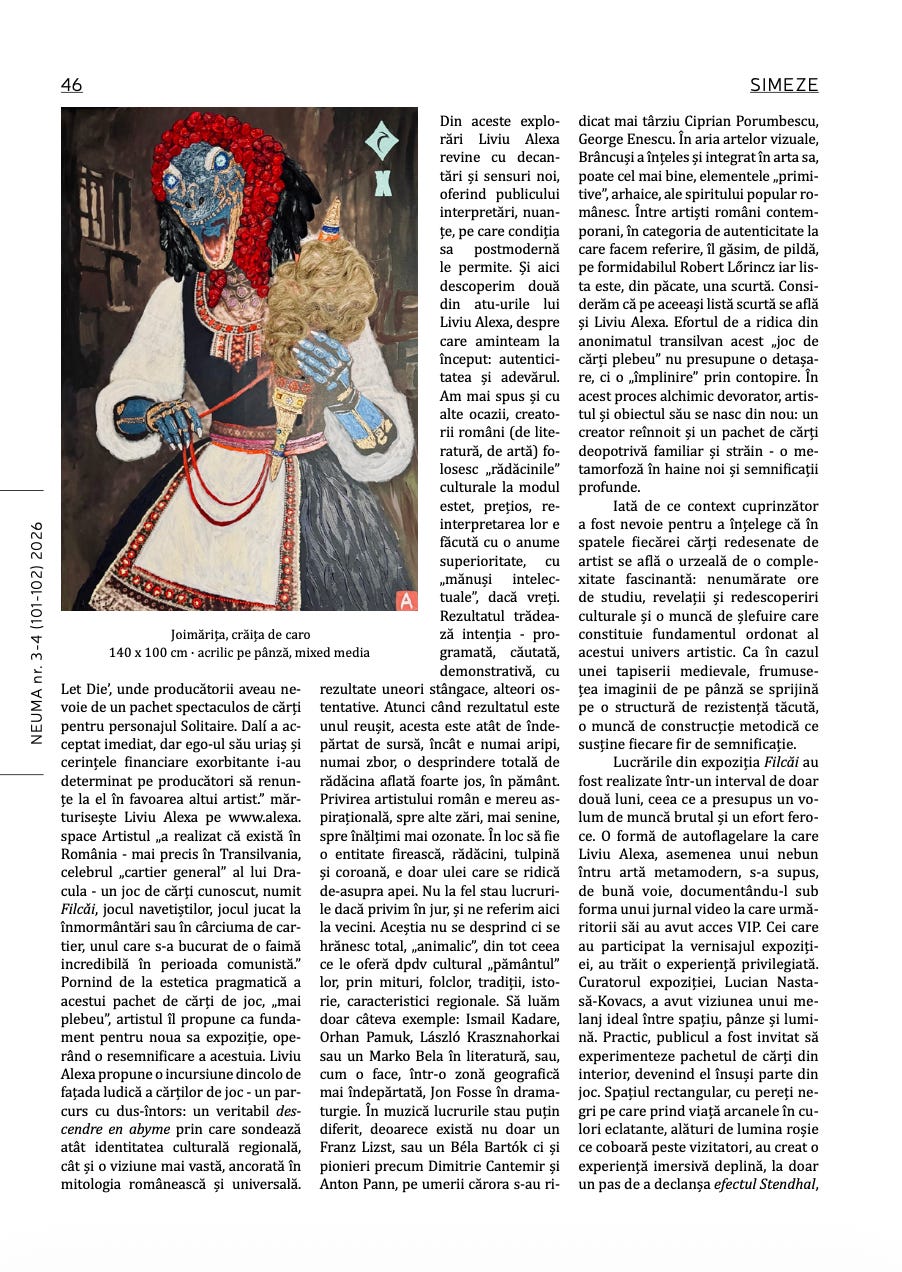
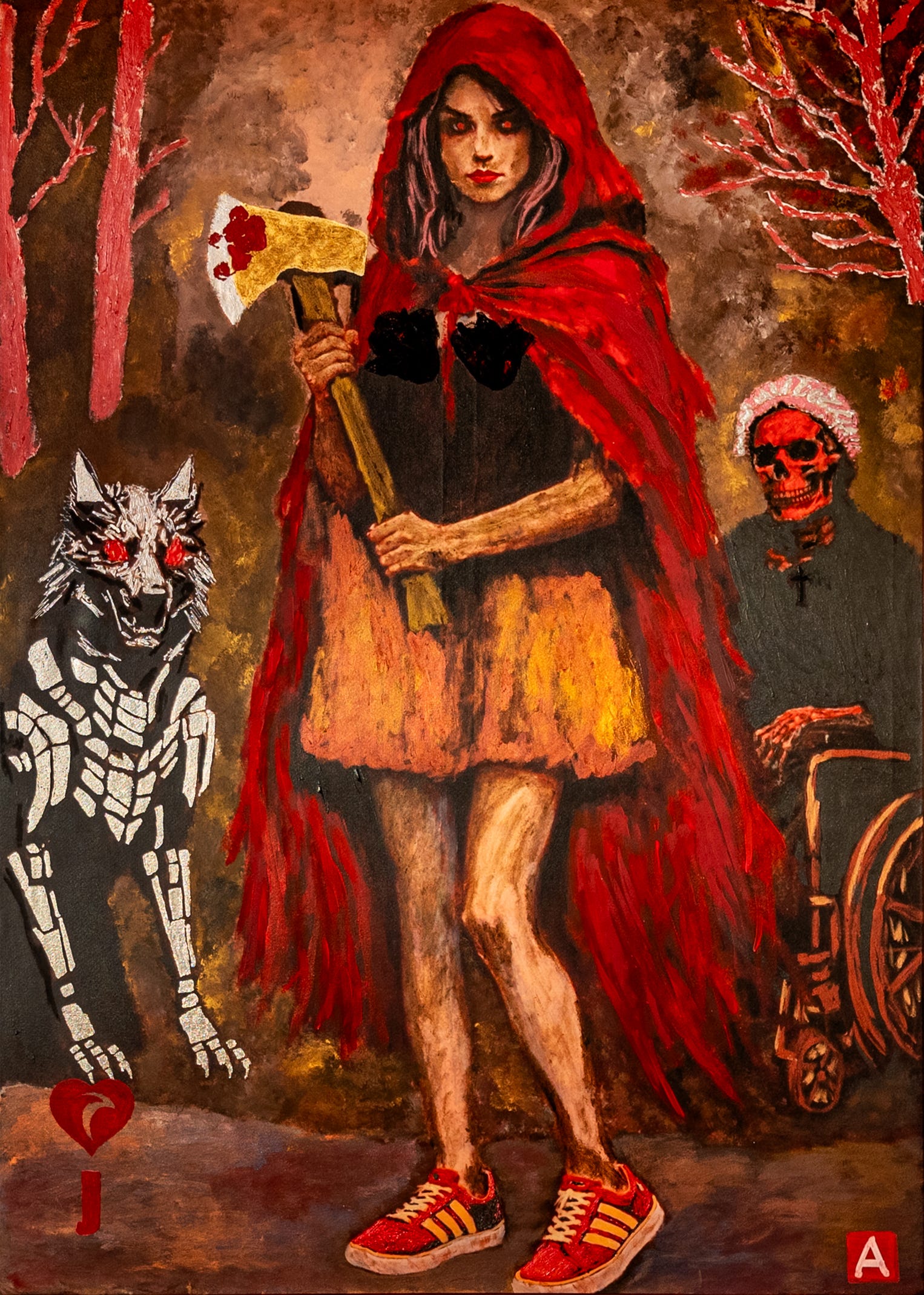
The artist "realized that there is in Romania - more precisely in Transylvania, the famous "headquarters" of Dracula - a well-known card game, called Filcǎi, the game of commuters, the game played at funerals or in the neighborhood pub, one that enjoyed incredible fame during the communist period." Starting from the pragmatic aesthetics of this "more plebeian" deck of playing cards, the artist proposes it as the foundation for his new exhibition, re-signifying it. Liviu Alexa proposes an incursion beyond the playful facade of playing cards - a round trip: a true descendre en abyme through which he probes both regional cultural identity and a wider vision, anchored in Romanian and universal mythology.
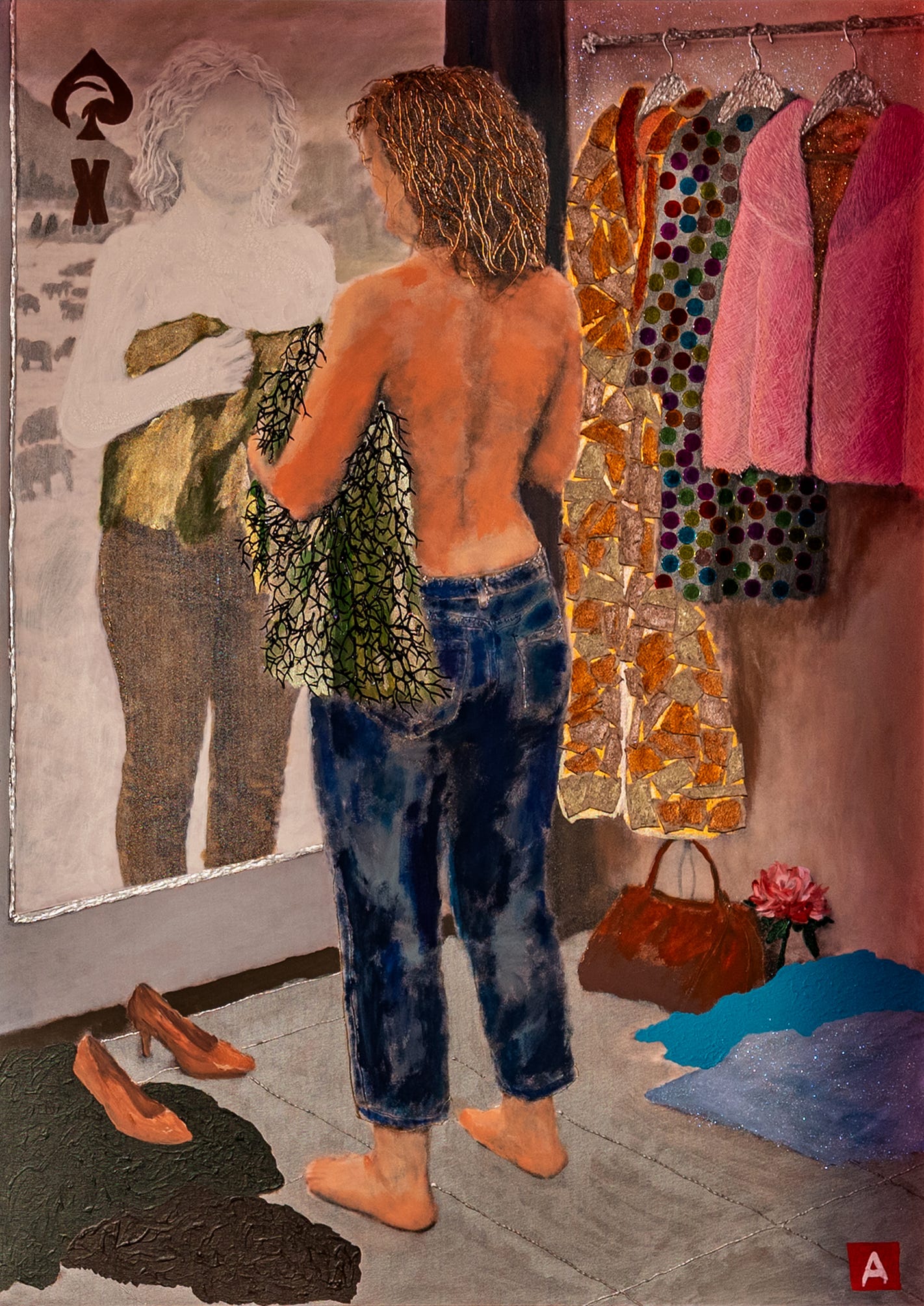
From these explorations Liviu Alexa it returns with decantations and new meanings, offering the public interpretations, nuances, which its postmodern condition allows. And here we discover two of Liviu Alexa's strengths, which I mentioned at the beginning: authenticity and truth. I have said on other occasions, Romanian creators (of literature, art) use cultural "roots" in an aesthetic, precious way, their reinterpretation is done with a certain superiority, with "intellectual gloves", if you will. The result betrays the intention - programmed, sought after, demonstrative, with sometimes clumsy, sometimes ostentatious results. When the result is a successful one, it is so far from the source, that it is only wings, only flight, a total detachment from the root located very low, in the ground.
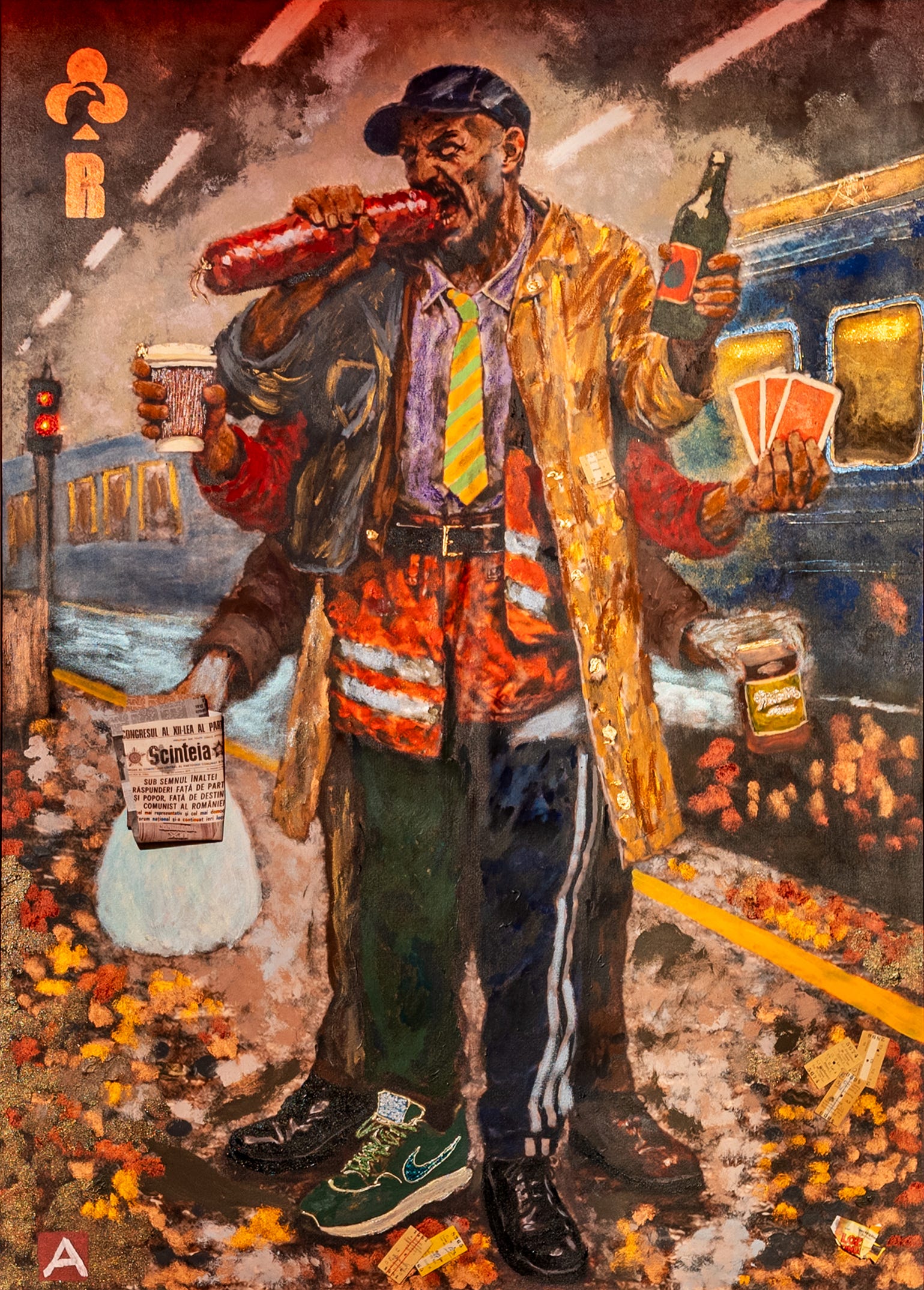
The Romanian artist's gaze is always aspirational, towards other, more serene horizons, towards more ozonated heights. Instead of being a natural entity, roots, stem and crown, it's just oil rising from the water. Things are not the same if we look around, and we are referring here to our neighbors. They do not separate themselves but feed themselves totally, "animalistically", from everything that their "land" culturally offers them, through myths, folklore, traditions, history, regional characteristics.
Let's take just a few examples: Ismail Kadare, Orhan Pamuk, László Krasznahorkai or a Marko Bela in literature, or, as he does, in a more remote geographical area, Jon Fosse in dramaturgy. In music, things are a little different, because there is not only a Franz Lizst, or a Béla Bartók, but also pioneers such as Dimitrie Cantemir and Anton Pann, on whose shoulders Ciprian Porumbescu, George Enescu later stood. In the field of visual arts, Brâncusi understood and integrated in his art, perhaps best, the "primitive", archaic elements of the Romanian folk spirit. Among contemporary Romanian artists, in the category of authenticity we are referring to, we find, for example, the formidable Robert Lőrincz and the list is, unfortunately, a short one. We believe they are on the same short list and Liviu Alexa. The effort to lift this "plebeian card game" out of Transylvanian anonymity does not presuppose a detachment, but a "fulfilment" through fusion. In this devouring alchemical process, the artist and his object are reborn: a renewed creator and a deck of cards both familiar and foreign—a metamorphosis into new clothes and deep meanings.
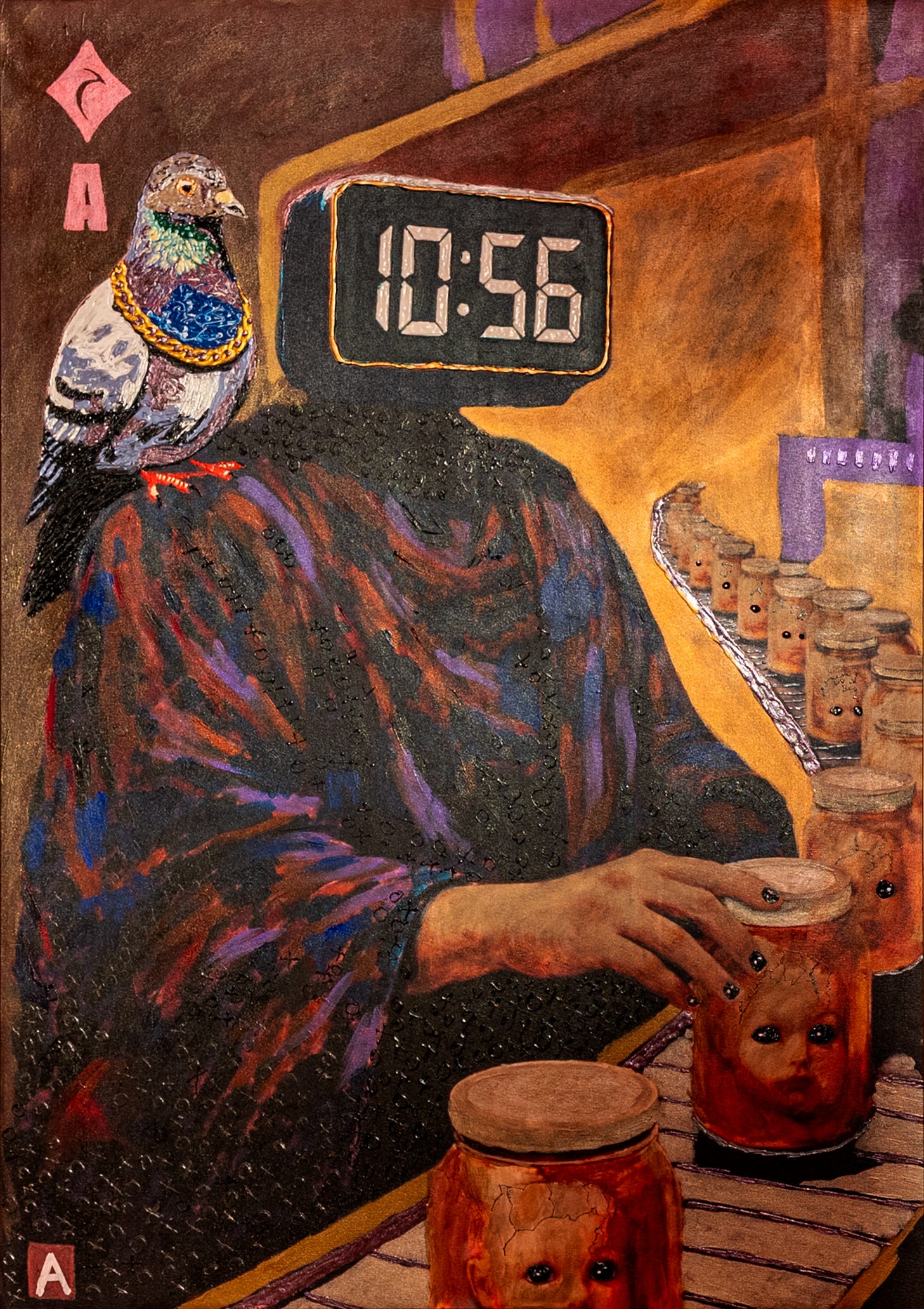
Here is what comprehensive context it took to understand that behind each card the artist redrawn lay a warp of a complexity fascinating: countless hours of study, cultural revelations and rediscoveries, and a grinding work that constitutes the orderly foundation of this artistic universe. As in the case of a medieval tapestry, the beauty of the image on the canvas rests on a structure of silent resistance, a methodical construction work that supports each thread of meaning. it involved brutal workload and ferocious effort. A form of self-flagellation that Liviu Alexa, like a madman in metamodern art, willingly submitted to, documenting it in the form of a video diary to which his followers had VIP access. Those who attended the opening of the exhibition had a privileged experience. The curator of the exhibition, Lucian Nastasă-Kovacs, had the vision of an ideal melange between space, canvases and light. Basically, the audience was invited to experience the deck of cards inside, becoming part of the game itself.
The rectangular space, with black walls on which the arcana come to life in striking colors, together with the red light that descends on the visitors, created a full immersive experience, at just one step from triggering the Stendhal effect, by exposing one to a massive flow of images and symbols, the aesthetic force of which exceeds the viewer's immediate absorption capacity. If in Apocalypse it is us Liviu Alexa's canvases are meditations on the theme of transhumanism, of man overtaken by technology, in Filcăi the artist reveals his metamodern condition, through sincerity, melancholy and the desperate search for a meaning in spirituality, in the roots understood as identity, story, myth. It's an hour of angels, kites and nymphs, as the famous title of Carmen Mihalache sounds, of deities in agony, in which the viewers are magnetically drawn, relearning to play to archaic rhythms that reverberate in their blood, with the hypnotic, shamanic frenzy of the melody Ciuleandrei
.
The immersive experience worked as a catalyst, revealing a fascinating analogy with another work drawn from the same vernacular aesthetic—this time, in the realm of musical composition. Here it is: Liviu Alexa's Filcăii, there are 20 cloths - arcane, 20 (number of transition and spiritual reward). The cantata Carmina Burana is based on 24 poems or stanzas. Filcăii are a "commoner" card game. The poems that form the basis of Carl Orff's composition are "profane". The universe belongs to simple people, with their joys and sorrows. Both in Liviu Alexa's Filcăii and in Carl Orff's cantata the world reflected is a world of those who are under the weather. The formula of playing cards imposes an initial, fixed form, a rhythm, a repetition, a vertigo - visual, in the case of the artist from Cluj, sonorous, in the case of the Bavarian artist.
The apparent simplicity of the themes, the wide range of subjects, the reflection of the dual nature of the human being, destiny or the gods unjust, give emblematic accents to the two creations. The massive canvases, the strong coloring, the decisive, sometimes demonstrative touches pressed onto canvas, the almost aggressive, unmanageable suggestive force of the paintings, the vibrant assurance with which the artist achieves mixed media and personalizes installation art allow us to carry this parallel further with the dramatic impact of Carmina's powerful, sonic explosion of sound through chorus and orchestration Burana. What produced the click was the immersion itself: the contrast between the darkness of mundane space, subject to the ephemeral, and the red, incandescent "sky" that seemed consumed by Fortune's wrath. In this setting, the mythical figures that surrounded those present did nothing but trace the new "edges of the world".
The experience was a real synaesthesia: the striking colors of the arcana seeming to dictate the rhythm of Ciuleandra and the red light transforming the space into a visual composition in which it seemed to be heard: "O Fortuna / velut luna / statu variabilis / semper crescis..." Returning to the characters Liviu Alexa's playing cards, their role as guardian spirits, guardians of the threshold between myth and mundane, between subconscious and conscious, between illo tempore and the time that no longer weathers, is revealed by a special characteristic: the eyes.
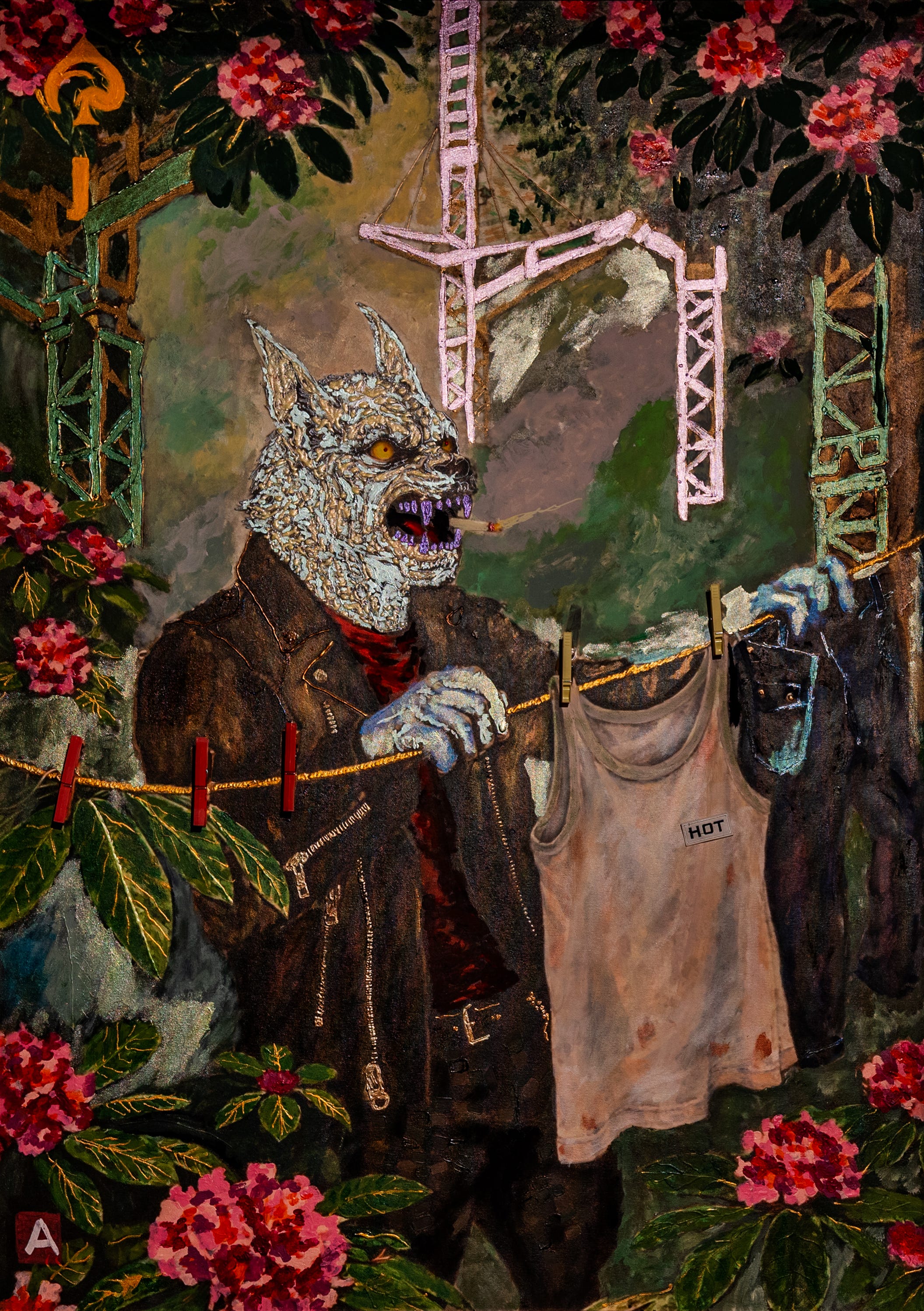
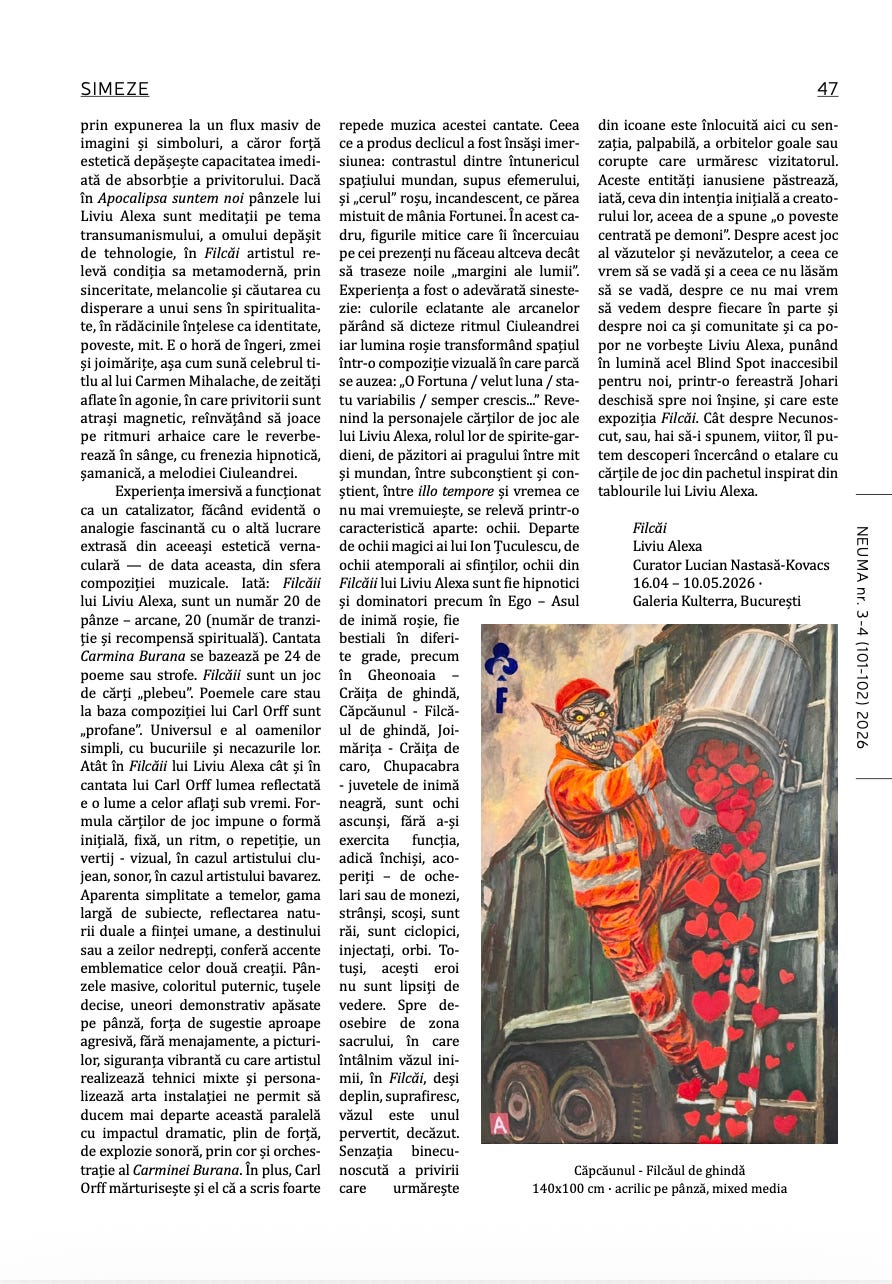
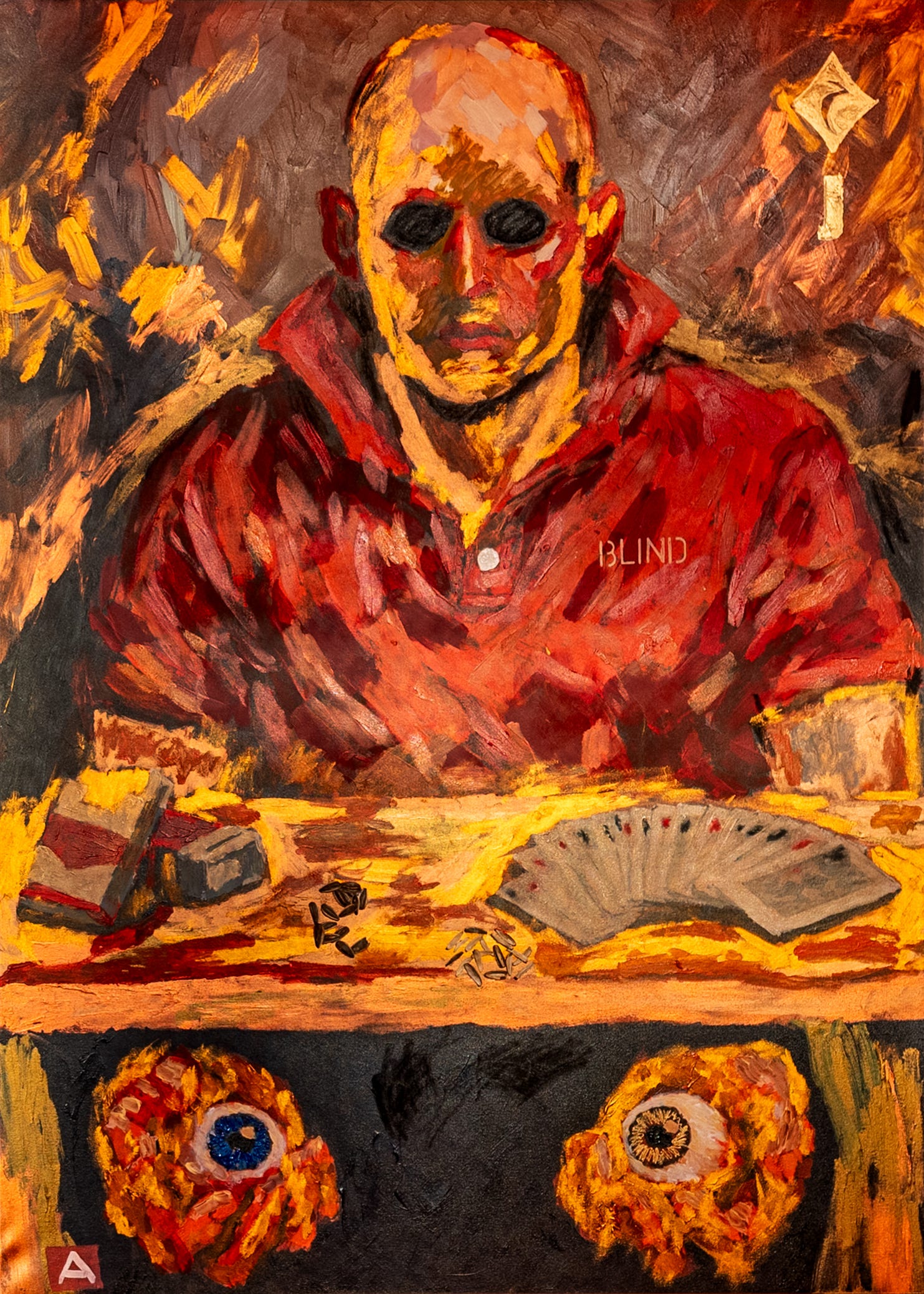
Far from the magical eyes of Ion Țuculescu, of the timeless eyes of the saints, the eyes in Liviu Alexa's Filcăii are either hypnotic and domineering as in Ego - The Ace of Red Hearts, or beastly to varying degrees, as in Gheonoaia - The Acorn Fillet, The Căpcăunul - The Acorn Fillet, The Joimărita - The Checkered Fillet, Chupacabra - The Jewels of the Black Heart, they are eyes hidden, without exercising their function, i.e. closed, covered - by glasses or coins, squeezed, taken out, they are bad, they are cyclopic, injected, blind. However, these heroes are not blind. Unlike the area of the sacred, where we encounter the vision of the heart, in Filcăi, although full, supernatural, the vision is a perverted, decayed one. The well-known sensation of the gaze watching from the icons is replaced here with the palpable sensation of empty or corrupted eye sockets following the visitor.
These Janusian entities retain something of their creator's original intent of telling "a demon-centered story." Liviu Alexa talks to us about this game of the seen and the unseen, of what we want to be seen and what we don't allow to be seen, about what we no longer want to see about each one of us individually and about us as a community and as a people, shedding light on that Blind Spot inaccessible to us, through a Johari window open to ourselves, and which is the Filcăi exhibition. As for the Unknown, or, let's call it, the future, we can discover it by trying a display with the playing cards from the pack inspired by Liviu Alexa's paintings.